
Epileptic spasms, also known as Infantile spasms is a rare epilepsy that affects young children, usually under one year old. This type of early onset epilepsy is called West syndrome. Epileptic Spasms typically begin around four months of age, but they can start as early as one month or as late as two years.
What does Epileptic Spasms look like?
Epileptic or infantile spasms can be very hard to recognise because they often look subtle and similar to things like infantile colic, acid reflux, or a normal startle reflex.
The typical spasm looks like a sudden bend forward with the body, arms, and/ or legs stiffening (flexor spasms). Sometimes the arms and legs may jerk outward instead (extensor spasms). Both sides of the body are usually affected equally, but sometimes, it can be just one sided. Some babies may show only subtle head drops that seem harmless, which makes the condition extremely easy to miss.
Each spasm lasts only 1–2 seconds, then there’s a short pause, followed by another spasm, i.e. in cluster.
Why is early diagnosis important?
In children wth epileptic or infantile spasms, their Electroencephalogram (EEG), i.e. brain wave recordings are very abnormal. This can lead to deterioration or loss of skills and even brain dysfunction. Because of this, it’s extremely important to recognise epileptic spasms quickly so treatment can start as soon as possible.
The longer these epileptic spasms continue without treatment, the higher the risk of developmental impairment. If the spasms are stopped early, children have a much better chance of developing well.
What are the necessary investigations for Infantile Spasms or West Syndrome?
If a child is suspected to have infantile spasms or West syndrome, they need to see a paediatric neurologist urgently. If you think a child is having infantile spasms, try to record the episodes on video and go straight to the nearest paediatric clinic or urgent care centre.
Your child should be seen by a paediatric neurologist for a full neurological assessment. As part of the comprehensive assessment, Dr Yeo may suggest an Electroencephalogram (EEG), which records the brain’s electrical activity.
The EEG may show a chaotic pattern called “hypsarrhythmia’’. See Figure 1.
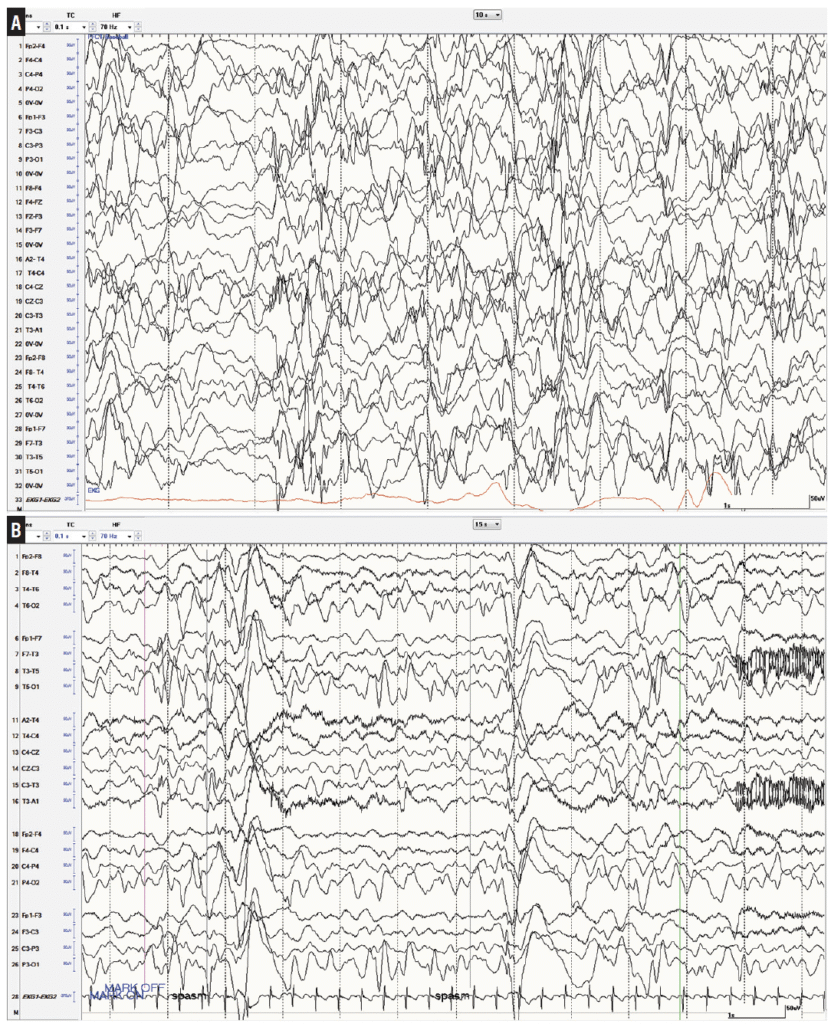
If infantile spasms or West syndrome if confirmed, Dr Yeo may suggest additional investigations, such as an MRI brain, neurometabolic tests or genetic testing
What are the potential treatment for Infantile Spasms or West Syndrome?
Infantile spasms usually don’t respond to the anti-epileptic drugs used for most other types of epilepsy. Two treatments work best and are usually recommended first, either alone or together:
- Oral hormonal treatment (e.g. oral prednisolone)
- Oral Vigabatrin (Sabril)
Other possible treatments include other anti-seizure medications (e.g. Clobazam, Topiramate or Epilim), Ketogenic diet, or epilepsy surgery.
What is the prognosis of Infantile Spasms or West Syndrome?
It’s extremely important to recognise epileptic spasms quickly so treatment can start as soon as possible. The longer these epileptic spasms continue without treatment, the higher the risk of developmental impairment. If the spasms are stopped early, children have a much better chance of developing well.
For more information about Seizures or Epilepsy, please click Seizure & Epilepsy
If you have any further questions, you can schedule an appointment today with Dr Yeo.
Reference:
Shields WD. Infantile spasms: little seizures, BIG consequences. Epilepsy Curr. 2006 May-Jun;6(3):63-9. doi: 10.1111/j.1535-7511.2006.00100.x. PMID: 16761063; PMCID: PMC1464162.